Feature, about a four-minute read
The scale, the closet and the mirror often tell the same quiet story. Here is a closer look at where konjac root and green tea fit into an ordinary day.
An easy-to-read overview of how everyday routines around weight tend to drift over the years, where a small konjac and green tea capsule called Willowyn sits in them, and why the rhythm of the day may matter as much as the food.
By the Matteoborsettofocus editorial desk. Updated October 2026.
See how the day is laid outOpens a sponsored video from the makers of Willowyn. A product is offered for sale at the end.
- Weight
- Meal timing
- Daily routine
- Everyday eating
- Reader notes
- Habits
- Sponsored content

Everyday weight: what often shifts over the years
Many women eat much as they did ten or fifteen years ago. The plate looks familiar: toast or yogurt on some mornings, a salad or sandwich at most lunches, whatever is left in the fridge at dinner. What tends to shift is less visible than the food. Days often involve more sitting and less walking, the scale shows a number that feels unfamiliar, and a favorite pair of jeans moves to the back of the closet. Energy and mood can dip through the afternoon, and photos start to feel like something to step away from. None of this announces itself. It simply becomes part of the background of an ordinary day, in how meals are spaced and in what ends up on the plate.
Four areas often come up when people talk about weight and everyday eating: rhythm, fiber, timing, and portions. None of them requires a new diet. Each is mostly a question of when and how much rather than what is allowed or off-limits, and each can be looked at without altering a single ingredient in the kitchen.
Rhythm
For many people, food ends up concentrated in the evening instead of spread across the day. Breakfast is coffee and something small, lunch is eaten at the desk in a rush, and by evening most of the day's eating arrives in one sitting, often followed by grazing in front of the television. A simple way to picture the day is as three steady anchors rather than one large meal at the end. Seen this way, it is a question of order rather than of a smaller plate.
Fiber
Many people settle into a short rotation of familiar meals, and that rotation can narrow the range of vegetables, beans and whole grains on the plate. A Willowyn capsule with a glass of water before lunch is sometimes the only planned fiber some readers mention adding to the day, which says less about the capsule itself and more about how the rest of the menu was arranged. Widening what appears on the plate, even by two or three different items a week, is a matter of variety rather than quantity.
Timing
A late dinner once simply meant eating later. For many people it now means the evening meal sits close to bedtime, with snacking stretching into the last hours before sleep. Some notice they prefer a little more space between the last bite and the pillow. Moving the last meal slightly earlier is a scheduling choice rather than a dietary one, and it is the kind of decision that can be made once instead of reconsidered every night.
Portions
Plate sizes often stay the same from one decade to the next, while the walking, lifting and standing of a busier life may not. That mismatch is common and rarely noticed at the table. Matching portions to a quieter daily routine is a matter of proportion rather than restriction, and it can be done gradually, one meal at a time.

Konjac meets green tea
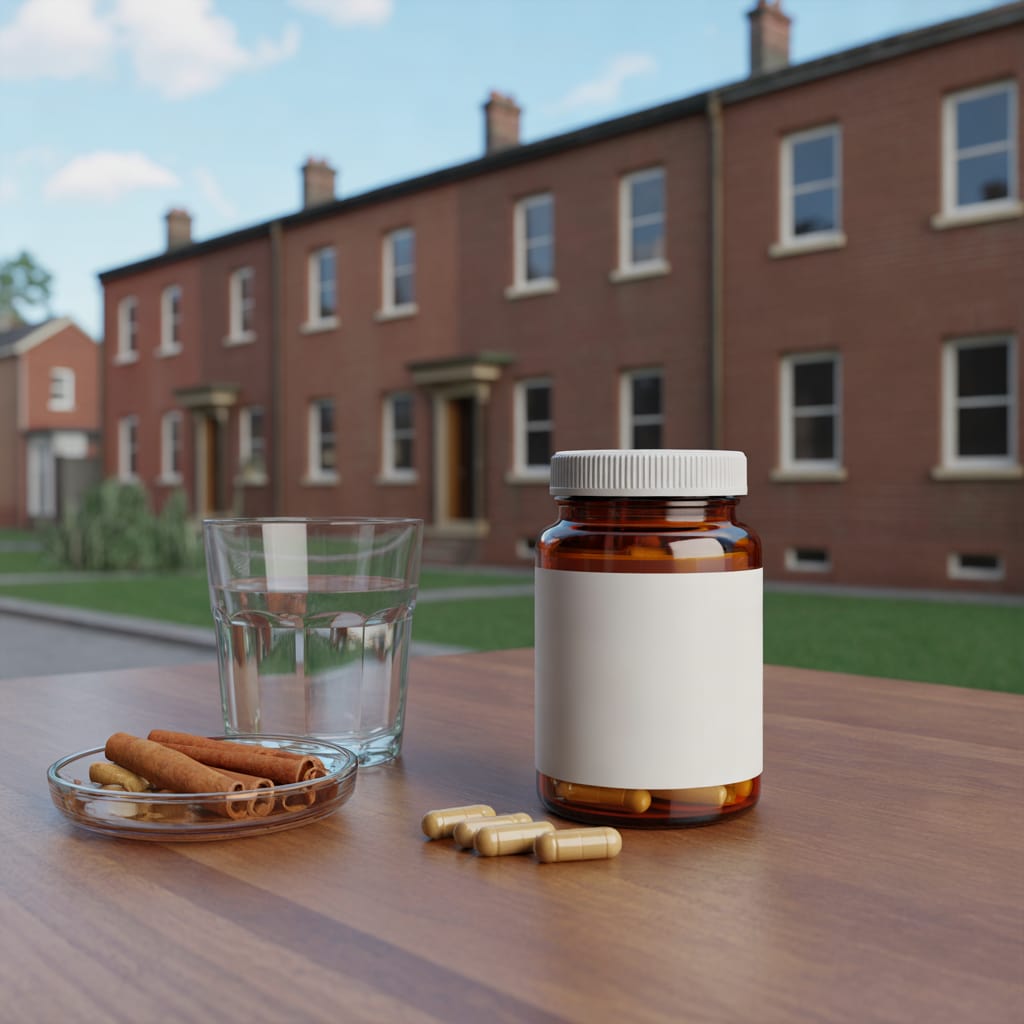
Willowyn is a capsule built around Glucomannan1, a soluble fiber taken from the root of the konjac plant and used for centuries in East Asian kitchens to make firm jellies and noodles. Alongside it sit Green Tea Extract2, Saffron Extract, Chromium Picolinate3 and Ceylon Cinnamon4, familiar names from the teacup, the spice rack and the multivitamin shelf. Konjac fiber is known in the kitchen mostly as a thickener; green tea brings its own plant compounds and a small amount of natural caffeine. Taking a capsule with water before a meal is one of the simpler ways some people put a planned moment of fiber into the middle of the day. It is simply one more part of the day that can be chosen deliberately rather than by habit, and anyone with specific dietary needs may wish to speak with a qualified professional before adding a supplement.
The idea behind it is simple: in this way of looking at the day, how meals and fiber are spread out sits alongside what ends up on the plate.
What goes into Willowyn
Glucomannan
From the root of the konjac plant, Amorphophallus konjac
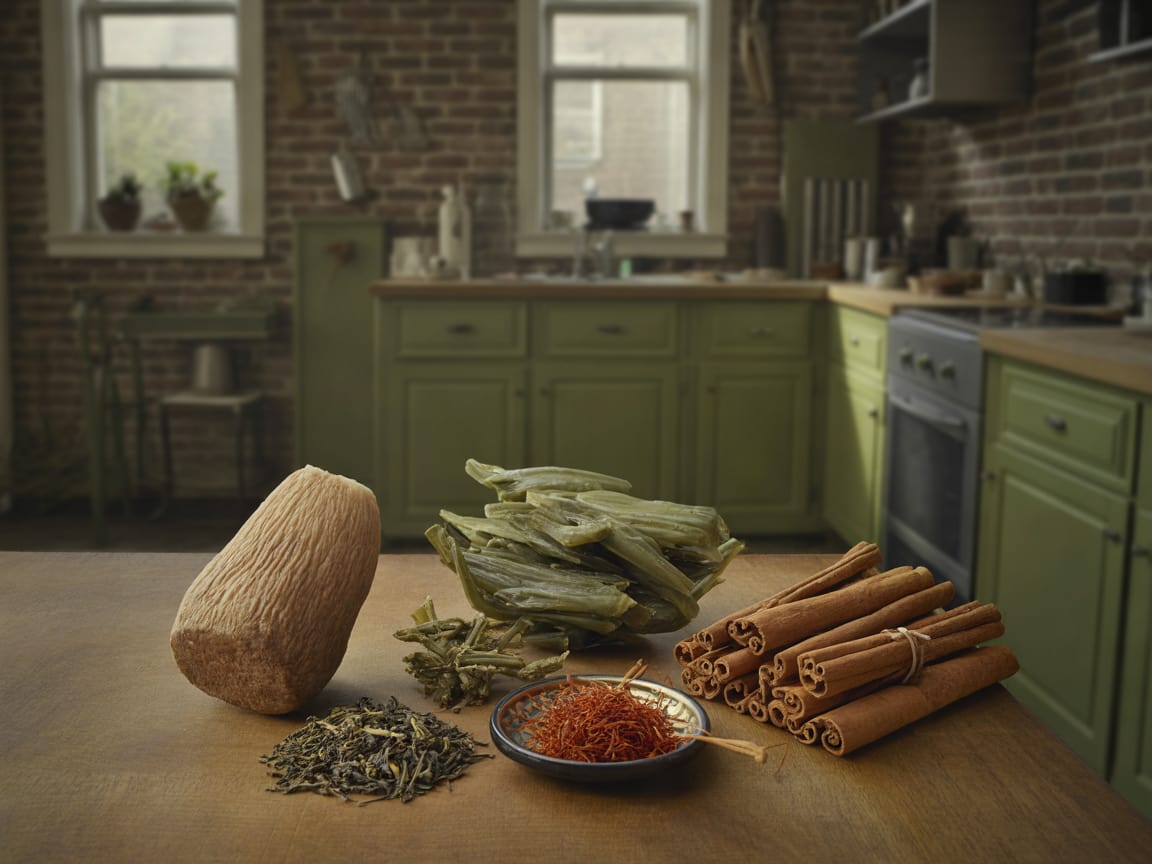
Glucomannan is a soluble fiber drawn from the starchy root, or corm, of the konjac plant, grown for generations in Japan, China and Southeast Asia. Its main compound is glucomannan itself, a long chain of the natural sugars mannose and glucose. In Japanese cooking, konjac flour has long been made into konnyaku jelly and the thin shirataki noodles. It has been the subject of published research, some of which is listed in the references below.
Green Tea Extract
From the leaves of Camellia sinensis
Green tea extract is a concentrate of the same leaves brewed in China and Japan for more than a thousand years. Its best-known compounds are catechins, especially one called EGCG, along with a small amount of naturally occurring caffeine. The leaves are traditionally steamed or pan-fired to keep their green color before drying. It appears in a wide range of published studies.
Saffron Extract
From the stigmas of the Crocus sativus flower
Saffron is the dried red thread from the center of a purple crocus, picked by hand in Iran, Spain and Kashmir. Its main compounds are crocin, which gives the golden color, and safranal, which gives the aroma. It is a prized kitchen spice in paella, risotto and Persian rice dishes. Researchers have looked at saffron extract in a number of published papers.
Chromium Picolinate
A trace mineral paired with picolinic acid
Chromium is a trace mineral found in small amounts in everyday foods such as broccoli, whole grains, green beans and brewer's yeast. In the picolinate form, the mineral is paired with picolinic acid, a natural compound. It is a common entry on multivitamin labels and has appeared in published research for decades.
Ceylon Cinnamon
From the inner bark of Cinnamomum verum
Ceylon cinnamon, sometimes called true cinnamon, comes from the thin inner bark of a tree native to Sri Lanka, rolled by hand into soft, layered quills. Its main aromatic compound is cinnamaldehyde. It is used in kitchens around the world in baking, spiced tea and curries. It has been studied in a range of published papers.
Simple pantry basics
None of this involves a new diet, a strict meal plan, or giving up favorite foods. It is about deciding, once, the general shape of an ordinary day so that it does not need to be reconsidered every morning before the first cup of coffee.
- No new diet to learn
- No strict meal plan to log
- No favorite foods to give up
- One decision about the day, made once
A choice made once is often easier to keep than a rule revisited every single day.
Where Willowyn fits
None of these is a recipe. Each is a simple choice made once, then kept.
Breakfast happens at a set time, with something planned
Instead of coffee and whatever is quickest, breakfast includes one planned item, such as eggs, yogurt with fruit or a bowl of oats, chosen ahead of time so it does not depend on how busy the morning is. It does not have to be large; it simply has to be there.
Lunch starts with a glass of water
Lunch begins with a full glass of water, and with a Willowyn capsule for those who have made it part of the routine. Sitting down to eat away from the desk, even briefly, gives the middle of the day its own shape without altering the total amount on the plate.
Dinner ends at a set hour, not whenever the day allows
The evening meal is planned to finish at about the same time on most nights, instead of drifting later as schedules shift. That one steady anchor gives the evening a clear edge, so the kitchen closes before the hours set aside for rest.
Common advice versus everyday reality
Some familiar pieces of advice keep getting repeated even after they no longer fit how most days actually go.
Any persistent shift in your daily routine is worth talking over with your doctor at a regular appointment.
Reader notes

Denise R., Ohio
I came across Willowyn after a summer of ducking out of family photos. I keep the jar next to the kettle and take a capsule with water before lunch, which is about as simple as a routine gets. I liked that nothing else in my kitchen had to be different.
Marisol T., Arizona
My favorite jeans had been sitting in the drawer for a while, and I wanted to look at my day differently instead of starting another diet. I've been taking Willowyn for about three months now. The capsules are easy to swallow and I enjoyed reading what each ingredient is.
Karen L., Oregon
I chose it mostly because konjac and green tea were things I already knew from cooking. The capsules are on the larger side, so I always take them with a full glass of water. It has become a normal part of my lunch break.
Joanne P., Georgia
My sister mentioned it, and I watched the presentation one evening before deciding. I take it on weekdays with lunch and it fits in without any fuss. Mostly I appreciate a routine that doesn't involve weighing my food.
Reviews reflect individual experience. Results vary and are not typical.
Frequently asked questions
Do I need to eat less overall, or just spread meals differently?
This page does not set an amount. The ideas here are about how meals are spaced across morning, midday and evening rather than about a target number.
Is this an eating plan I must follow daily?
No. The ideas covered here are choices about meal order and timing that are made once, not a daily program that has to be logged or restarted.
Where does Willowyn fit into all of this?
Willowyn appears here as one example of a planned midday habit: a capsule with konjac fiber, green tea extract, saffron extract, chromium and Ceylon cinnamon, taken with water. It is a dietary supplement, not a medicine, and the same thinking about rhythm applies with or without it.
Why do afternoons seem slower than they once did?
Many people notice their afternoons are tied to what went into lunch and to the gap until dinner. Paying attention to that pattern for a week or two is a simple place to begin.
Do I have to give anything up?
Nothing covered here involves removing foods. The focus is only on timing and portions, not on restricting what you eat.
What is the presentation, and how long is it?
It is a sponsored video from the makers of Willowyn. The explanatory part lasts around four minutes and follows an ordinary day one meal at a time; at the end, Willowyn is offered for sale.
Is this guide medical advice?
No. This page and the presentation it links to are sponsored material, not medical advice, and they do not replace a conversation with a qualified healthcare professional.
Scientific references
These are published studies on the individual ingredients, not on Willowyn itself. Most were carried out in other populations and settings, and none of them shows that any supplement treats or prevents anything.
- Sood N, et al. (2008) — Effect of glucomannan on plasma lipid and glucose concentrations, body weight, and blood pressure: systematic review and meta-analysis. Am J Clin Nutr. (Meta-analysis) PMID 18842808
- Nagao T, et al. (2007) — A green tea extract high in catechins reduces body fat and cardiovascular risks in humans. Obesity (Silver Spring). (Randomized trial) PMID 17557985
- Anton SD, et al. (2008) — Effects of chromium picolinate on food intake and satiety. Diabetes Technol Ther. (Randomized trial) PMID 18715218
- Beejmohun V, et al. (2014) — Acute effect of Ceylon cinnamon extract on postprandial glycemia: alpha-amylase inhibition, starch tolerance test in rats, and randomized crossover clinical trial in healthy volunteers. BMC Complement Altern Med. (Randomized trial) PMID 25249234
Walk through the whole daily routine
The presentation walks through an ordinary day, meal by meal, explaining the reasoning behind where a simple Willowyn capsule might sit and how order and timing fit around it.
Willowyn is sold at $49 per bottle.
Watch the presentationSponsored video from the makers of Willowyn. A product is offered for sale at the end.